
左手亲情右手爱Rise of AI performers triggers concerns about human actors_我的网站
一 | 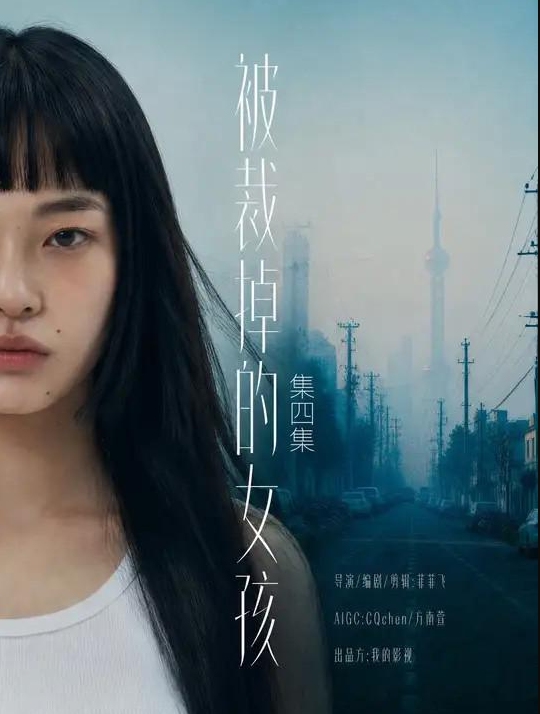 Fang Taozi, an AI-generated character who stars in the hit AI short drama series The Girl Who Was Fired, has posted lifestyle vlogs, launched social media accounts, shared her breakfasts, workouts and pets, landed brand deals and has a fanbase. Since the drama debuted on short video platform Douyin on June 12, it has accumulated 200 million views. Fang's Douyin account has attracted more than 400,000 followers. Fans interact with her as if she were a real celebrity, creating fan edits, discussing fictional relationships and building a community around her imagined life. This raises a question that has become increasingly urgent for the entertainment industry: Does Fang Taozi represent the first generation of AI celebrities? The answer depends on how "celebrity" is defined, said Zhang Peng, a cultural researcher and associate professor at Nanjing Normal University, in an interview. If celebrity status is measured by public attention, emotional connection and commercial value, Fang appears to meet many of the criteria. She has fans, a personal brand and even advertising opportunities. Whether AI can truly become stars depends not on the technology itself, but on their ability to forge genuine emotional connections with audiences and sustain their appeal over time, added Zhang. However, Shi Wenxue, a Beijing-based cultural critic, argues that AI stars have indeed emerged, but they should be viewed as part of the broader lineage of virtual idols. From the 1958 US virtual musical group Alvin and the Chipmunks to Hatsune Miku, Luo Tianyi and the hyper-realistic digital human Liu Yexi, virtual performers have existed in various forms for decades. From the perspective of how she is created, Fang Taozi represents a technological advance. Her emergence is largely a product of the current economic environment of the film and television industry. The rise of AI performers has also triggered concerns among human actors, especially those working in smaller productions. Human performers bring personal experience, emotional interpretation and unpredictability - qualities that remain difficult to reproduce. But for industries that require large volumes of affordable content, AI characters offer obvious advantages: They do not age, can work continuously and can be customized for different audiences. AI short dramas are cheaper, faster and free from the risks associated with human performers, raising concerns over the future of lower-level entertainment jobs in areas such as short dramas, advertising, background acting and voice work, said Zhang. In Shi's view, beneath the debate lies a familiar tension: technological efficiency versus the threat of displacement for human workers. The question is not whether AI will completely replace actors, but which parts of acting and entertainment can be automated, he noted. Rather than presenting an AI figure only as a digital image, Chinese platforms appear to be building complete entertainment ecosystems around AI characters, including dramas, social accounts, fan interactions and commercial partnerships. China's AI stars have grown out of the audience's desire for emotional companionship, while Hollywood's AI experiments have been shaped by industry battles over efficiency and costs, noted Zhang. According to Shi, Fang Taozi's sudden popularity is, in many ways, a reflection of audience psychology. Whether they are moviegoers, fans or casual viewers, audiences have grown weary of formulaic content, scripted fan service, predictable performances and fragile celebrity personas. An idol like Fang Taozi offers an alternative: She cannot be involved in scandals, play diva or break character, and her persona can be adjusted to meet audience demands. But the model also comes with risks, particularly the limitations of its creators and the potential for excessive commercialization. 。 由你来说:对比其他市场,诸多国产游戏都会采用影游类型。你觉得影游被中国游戏开发者青睐的原因是什么?你爱玩这种类型吗?近期,部分国产真人互动影游在Steam上线后评价数量快速增长,引发玩家对“刷好评”现象的讨论。有玩家发帖表示,自己前一天查看《绍宋:还我河山》时,游戏Steam评价还处于“褒贬不一”或“多半好评”阶段,评价数量也并不算多,但到了第二天,评价数量突然增长至1000多条,并变为“特别好评”。 该玩家同时提到,《花满楼》也出现了类似情况,游戏发售仅一天,Steam评价便达到“好评如潮”。对此,他质疑道:“Steam刷好评不要成本的吗?就算把人骗进来了别人也能两小时退款,有意义吗?” 这一现象也引起了其他玩家讨论。
二 | 有玩家表示,自己观察到部分国产游戏的Steam好评存在较为明显的相似特征,不少好评玩家的游戏时长集中在2.1小时至3小时左右,且评价内容相对简单,认为这类评价可能与刷评行为有关。 该玩家猜测,因为Steam游戏评价存在“游戏时长至少2小时”的要求,因此刷评人员只需要按照要求游玩至超过退款门槛,再留下评价即可。他表示:“甲方明确了游戏时间至少2小时,刷的一方当然就中规中矩地按合同办事。” 不过,目前上述玩家讨论均属于个人观察和推测,并没有证据能够证明《绍宋:还我河山》《花满楼》等具体游戏存在人为刷好评行为。本文由游民星空制作发布,未经允许禁止转载。更多相关资讯请关注:绍宋:还我河山专区。 Current article:http://zxuirk.foujiongwenruapoumeizhan.buzz/news/20260826_525.html Published on:05:51:44 |

